
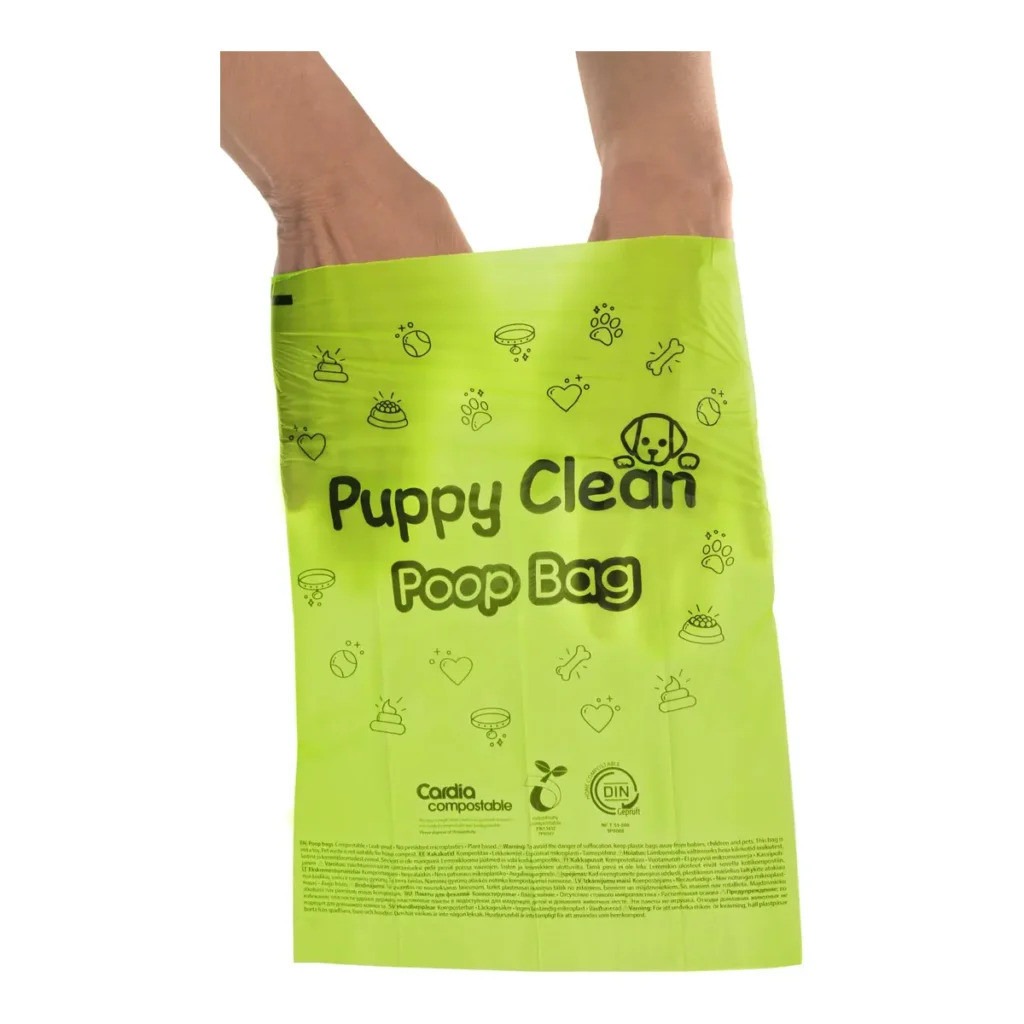
The word “compostable” describes a material’s behaviour under suitable conditions. It does not tell you where to put a bag containing dog waste. The bag and its contents must both be accepted by the collection system.
A filled bag belongs in the right bin
In Tallinn, dog waste must go into a household-waste bin or suitable collection bin. The city explicitly excludes pet waste from food-waste containers, even in a compostable bag. When elsewhere, follow the local waste operator’s guidance.
Tie the bag securely. Do not put a soiled bag in packaging recycling, leave it in nature or flush it down the toilet.
Biodegradable and compostable are different claims
“Biodegradable” alone does not specify how quickly a material breaks down or under what conditions. A compostability claim needs context too: industrial composting and home composting are different environments. Check the packaging for the intended conditions and any certification rather than assuming the terms mean the same thing.
Do not assume a bag will quickly disappear in soil, water or a household-waste treatment system. Its disposal route still matters.
How this applies to PuppyClean
PuppyClean PC5001 contains 120 compostable bags on eight rolls. Its product guidance says to follow local collection rules and that pet waste is unsuitable for home composting. We therefore do not recommend putting filled bags in a backyard compost pile.
Keep unused rolls in their packaging and follow the storage information on the pack. Check a bag for damage before use, especially if it has been carried loose for a long time.
A simple rule for daily walks
Pick up, tie closed and use a suitable waste bin. If there is no bin, carry the bag with you. Choosing a compostable bag never replaces picking up after your dog.
PuppyClean compostable poop bags, 120 bags →
Local guidance: Tallinn’s waste-sorting questions.