
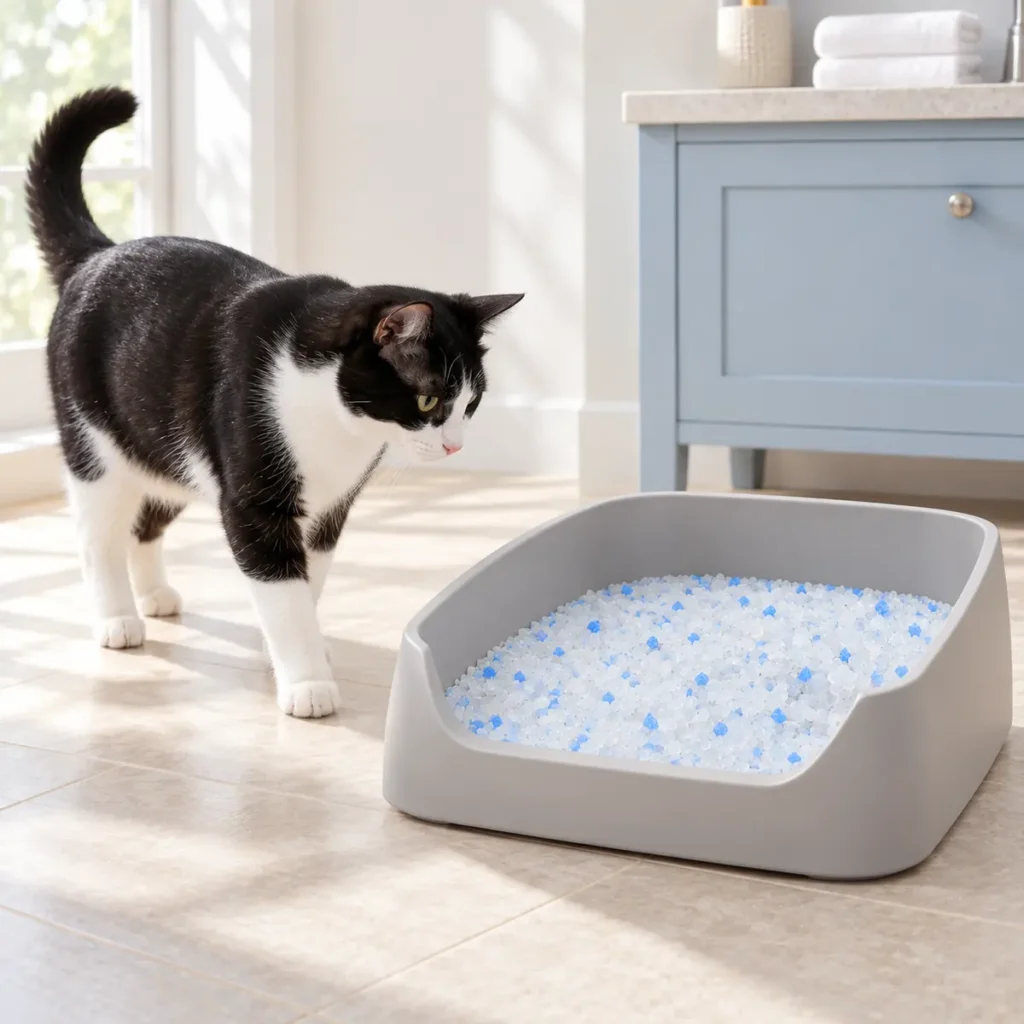
Several cats do not necessarily want to share one toilet, even if they sleep or play together. A comfortable arrangement gives each cat a choice and lets you clean busy boxes before they become unpleasant. Start with the number and location of boxes, then choose the litter.
Use one box per cat, plus one extra
A useful starting point is one litter box for each cat and one spare. For two cats, plan three boxes; for three cats, plan four. This is a starting point rather than a guarantee that every household will work with exactly that number.
A larger box or a bigger bag of litter does not provide the same choice as several accessible boxes. Keep an indoor option even for cats that also go to the bathroom outdoors.
Spread the boxes out
Place boxes in different quiet, accessible locations rather than lining them up together. If one cat blocks the route to a row of boxes, the others can lose access to all of them at once. In a home with several floors, think about access on each level.
Look at the route as well as the spot itself. A box behind a closed door, a noisy appliance or a narrow passage that another cat guards may be difficult to use. Keep boxes away from feeding areas.
Watch each cat’s preferences
Your cats may prefer different litter textures or box styles. Notice who uses each box, when it is busiest and whether any cat waits, turns away or goes to the bathroom elsewhere. A simple note of box use can help you spot a practical pattern.
Do not change every box to a new material at once. Leave familiar litter available while testing an alternative. This also helps you see whether the new product suits all your cats or only one.
Choose KittyClean by routine, not pack size alone
KittyClean Tofu Natural and Compact Plus bentonite form removable clumps. They suit a routine where urine clumps and solid waste are scooped out regularly and the layer is topped up according to the pack.
KittyClean silica gel 6 L is a non-clumping crystal option. With heavier use, monitor absorption carefully rather than assuming a larger pack will last a fixed number of weeks.
If odour control is a priority, explore tofu with activated carbon or bentonite with activated carbon. These ingredients do not compensate for too few boxes or infrequent cleaning.
Give busy boxes more attention
Check every box daily and clean heavily used ones more often. Do not assume use is spread equally. Keep track of fill depth, remaining absorption capacity and when each box was last washed.
Compare litter consumption over time across the whole household. The amount you need depends on use, box size and cleaning, not simply the number printed on a bag.
If a cat suddenly avoids the box, seek veterinary advice as well as checking access and cleanliness. Do not treat every accident as competition between cats.
Read the litter care guide →
How to introduce a different litter →
Product information: KittyClean. General guidance on box numbers and shared resources: Cats Protection — introducing cats. Box access and setup: Battersea — litter box setup.