
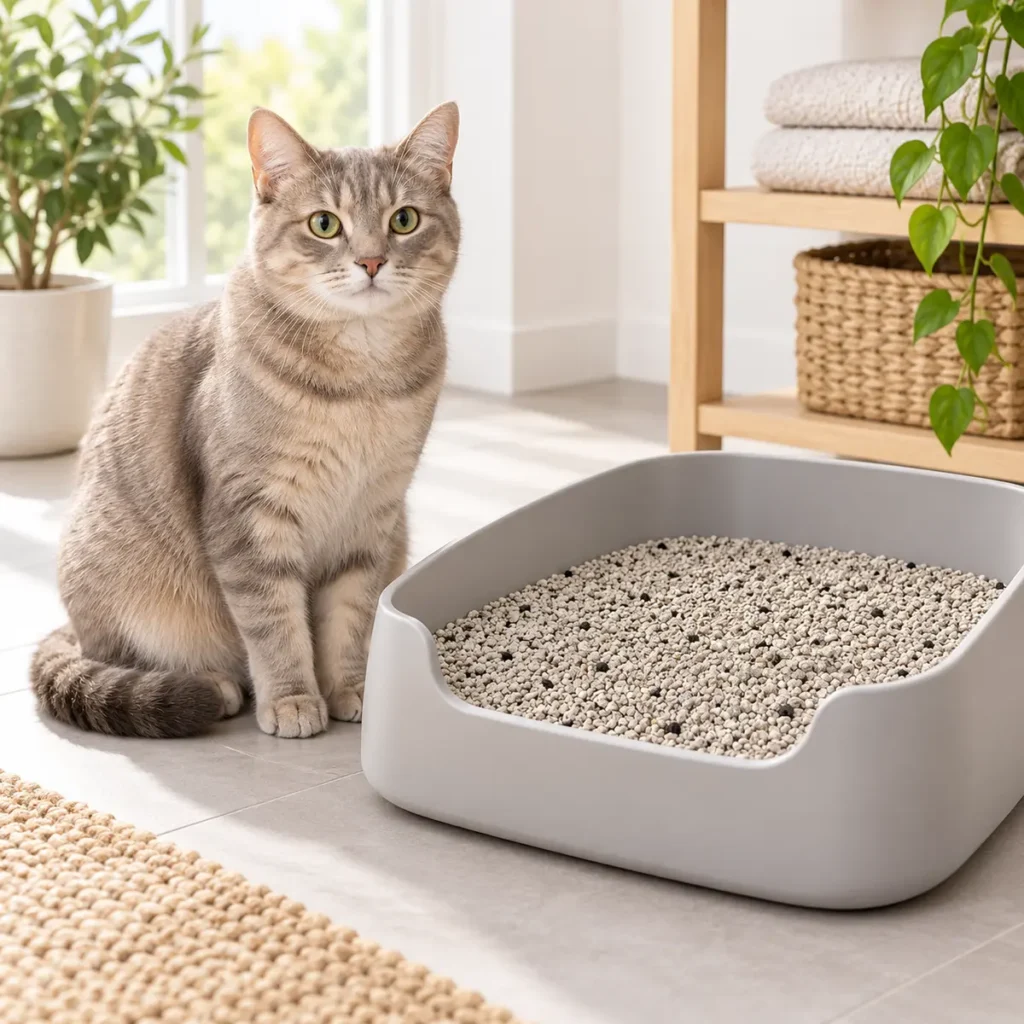
A fresher litter box depends on several small habits working together. The litter’s material matters, but so do waste removal, fill depth and the condition of the box. Before changing products, look at where the smell remains after you have cleaned.
Remove the source each day
Check the box morning and evening. Remove solid waste and, with clumping litter, urine clumps. Lift clumps carefully instead of breaking them into the remaining litter. Look in the corners and around the base, where used litter can be easy to miss.
Put scooped waste in a closed bag and remove it from the room. An open waste container beside a clean box can make it seem as if the litter itself is still causing the smell.
Maintain the recommended fill depth
A shallow layer can allow wet litter to stick to the base. Top up after scooping, following your pack’s instructions. KittyClean tofu litter specifies a 5–8 cm layer; check the separate instructions for bentonite and silica gel.
Adding fresh litter cannot restore the absorption capacity of saturated litter. If the box stays damp or smells after waste removal, check whether it needs a full change and wash.
What activated carbon contributes
KittyClean Compact Plus bentonite with activated carbon combines removable clumps with an ingredient intended to help control odours. It is fragrance-free: odour control does not have to mean adding perfume.
If you prefer plant-based pellets, consider KittyClean tofu litter with activated carbon. Choose the material your cat accepts and can use comfortably, then select the variant. Activated carbon supports the care routine; it does not replace scooping or guarantee an odour-free box.
Wash the box, not just the scoop
During a full change, empty the box, wash it with a mild cat-safe cleaner, rinse thoroughly and let it dry. Clean the scoop and the area around the box too. If the empty, washed box retains a smell, inspect it for damage and deeply scratched areas that are difficult to clean.
A covered box can hold odours inside. Check beneath the cover and around its joins, and keep the entrance clear. Avoid using strong fragrance to disguise a dirty box; your cat experiences those smells at much closer range.
A simple check before buying another litter
- Have all clumps and solid waste been removed?
- Is the fill depth correct for the product?
- Is the remaining litter still dry and absorbent?
- Are the box, scoop and nearby waste container clean?
- Does every cat have easy access to a clean box?
Change one part of the routine at a time so you can see what helps. If you choose a different litter, introduce it gradually.
Read the litter care and replacement guide →
How to introduce a new litter →
Product information: KittyClean. General guidance on box cleanliness and covered boxes: Cats Protection — cats and toileting. The checklist is a practical way to apply these principles at home.