
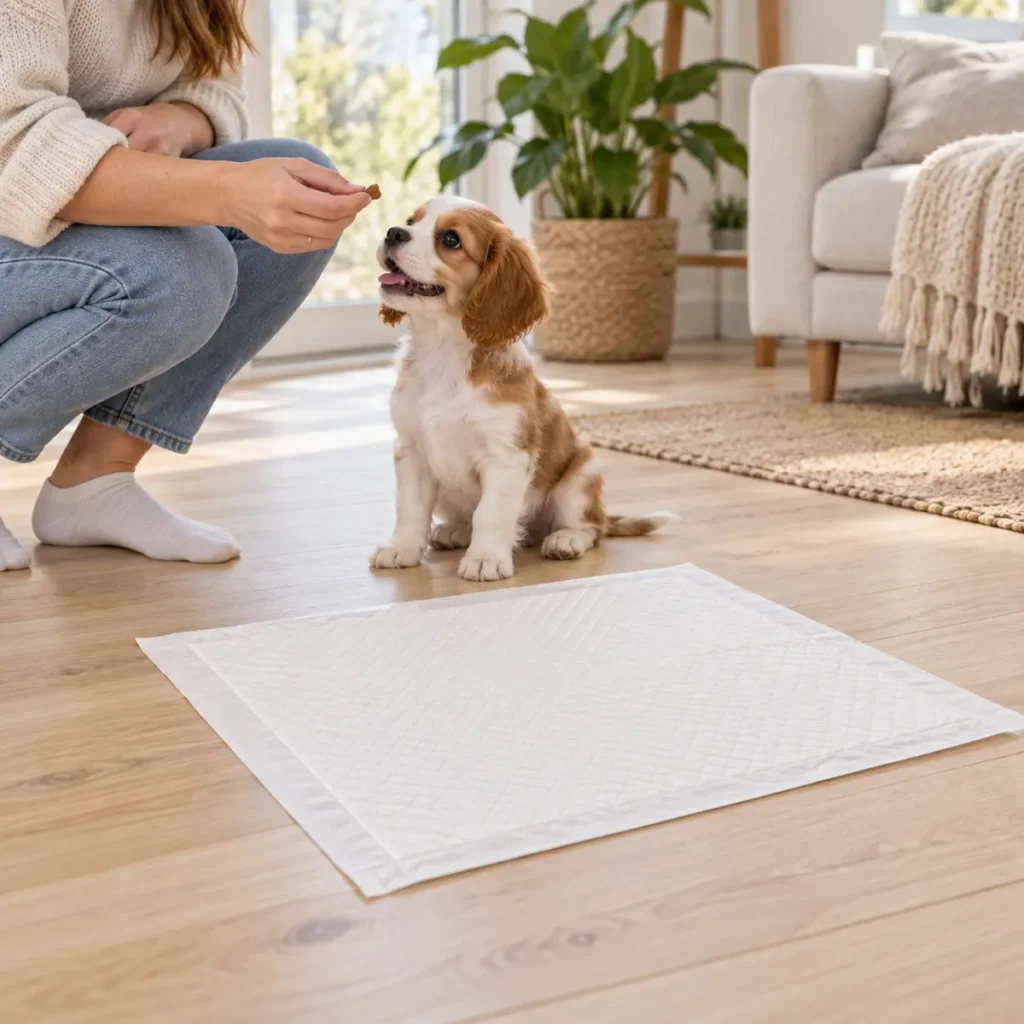
Training pads can help protect the floor while a puppy learns where to go to the bathroom. They work best alongside a consistent routine, supervision and rewards. If your goal is for your puppy to go to the bathroom outdoors, make regular outdoor breaks part of the plan.
Keep the pad in one suitable place
Choose an accessible spot away from the puppy’s bed, food and water. Spread the pad flat with the waterproof side down. PuppyClean PC5002 pads measure 60 × 60 cm and come in a pack of ten.
Make sure your puppy can stand fully on the absorbent area. A puppy that keeps missing the edge may need a better-positioned or larger potty area. Avoid moving the pad from room to room.
Notice the right moments
Offer a potty break after waking, eating or active play. Watch for sniffing, circling or restlessness. Calmly guide the puppy to the chosen place and give it time.
Reward immediately after the puppy finishes in the right place. Keep the reward close by so the puppy can connect it with what just happened.
Handle accidents calmly
Do not punish or rub the puppy’s nose in the mess. Clean the surface with a suitable product, following its instructions, and review whether the puppy needed an earlier potty break. Replace a wet pad with a fresh one in the same spot.
Dispose of used pads with household waste; never flush them. If your puppy tears or chews a pad, supervise its use and prevent access to torn pieces.
Build an outdoor routine
Offer frequent chances to go to the bathroom outdoors and reward success there too. As your puppy reliably goes to the bathroom outdoors, gradually reduce use of the indoor pad. Avoid expecting the pad alone to teach the outdoor habit.
Pads are also useful for older dogs
They can protect surfaces for dogs with reduced mobility or during recovery. New accidents in a previously house-trained dog should be discussed with a vet rather than treated only as a training issue.
PuppyClean training pads, 60 × 60 cm, 10 pads →
Further guidance: Earth Rated’s training-pad guide.