
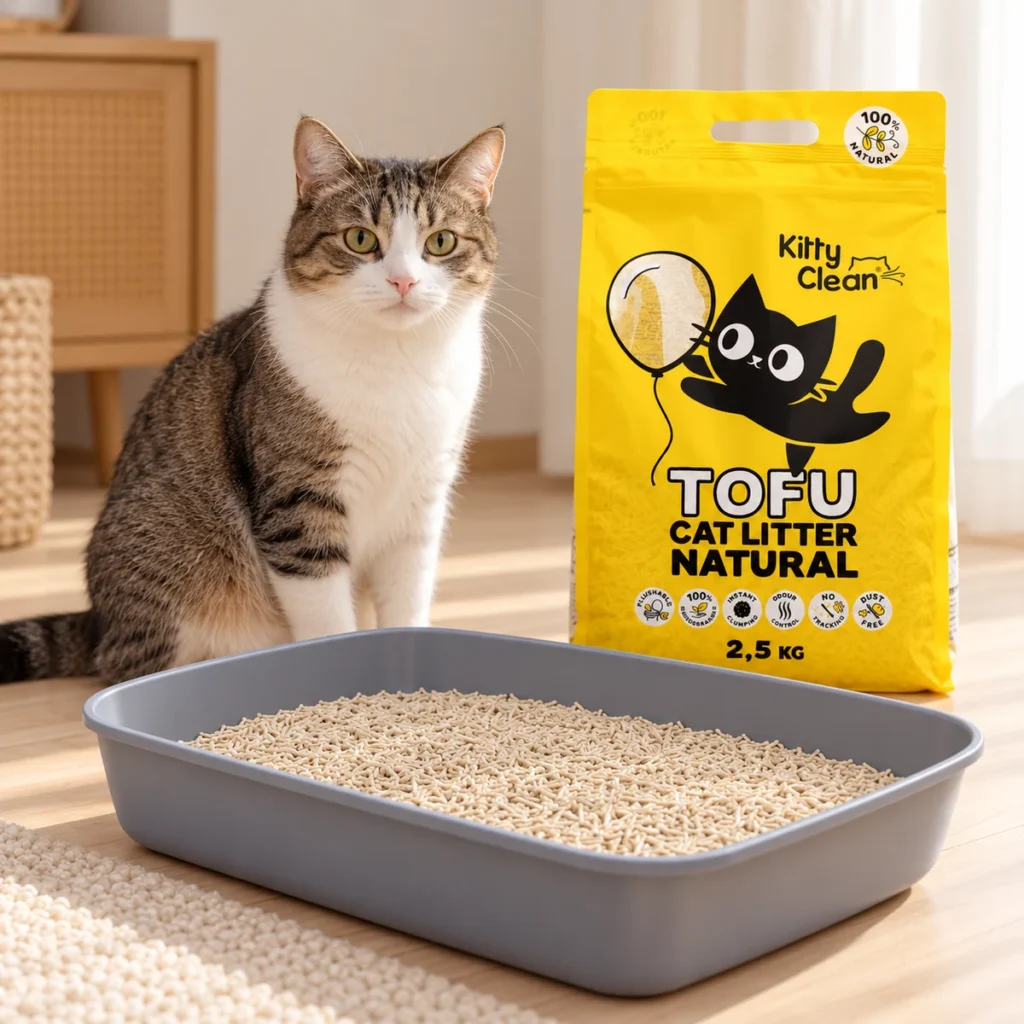
Choose a disposal method as carefully as you choose the litter itself. KittyClean tofu pellets, bentonite granules and silica gel crystals behave differently. Read your particular pack and check the waste and wastewater guidance that applies where you live.
Tofu: water-soluble pellets and small-quantity flushing
KittyClean Tofu Natural is made from plant-based ingredients. Its product instructions describe the litter as water soluble and flushable in small quantities. The same tofu range includes activated carbon and green tea extract variants; always read the instructions on the pack you use.
Where the local wastewater guidance and your drainage system permit this disposal route, follow the pack carefully: let the clumps dissolve in the toilet bowl before flushing and dispose of them gradually. Do not flush several clumps together or empty a whole box into the toilet. Large quantities can cause a blockage.
Water solubility describes the material’s behaviour; it is not approval for every toilet, septic tank or treatment system. If you are unsure about your installation or the local guidance, choose the permitted household-waste route instead.
Bentonite: keep clay litter out of the toilet
KittyClean Compact Plus bentonite and the activated carbon version are mineral clay litters. Collect used clumps and solid waste in a suitable closed bag and dispose of them according to local household-waste instructions. Do not flush bentonite.
Clumping makes daily removal convenient, but it does not make the clay water soluble. Treat a full box change as a waste-disposal job, not a reason to wash remaining granules down the drain.
Silica gel: crystals belong in the appropriate waste stream
KittyClean silica gel litter absorbs moisture without forming urine clumps. Remove solid waste daily and collect the spent crystals when the litter needs replacing. Bag them securely and follow local household-waste guidance; do not flush them.
Biodegradable does not automatically mean a food-waste bin
The plant-based nature of tofu litter is a material benefit, but used cat litter also contains animal waste. Check whether your local collection service accepts it before putting it in a bio-waste container or composting system.
Do not add used cat litter to compost intended for growing food. Follow the collection instructions for your area when choosing a bin for used litter.
Keep disposal tidy
- Keep the scoop and waste container easy to clean.
- Close bags before placing them in the appropriate bin.
- Keep used litter away from clean supplies and wash your hands afterwards.
- Sort the empty packaging separately, following its material markings and local guidance.
When should you replace the litter? →
Compare KittyClean litter materials →
Product properties and tofu flushing procedure: KittyClean product instructions. Always follow the instructions on your pack and the guidance for your own drainage system.